Let’s talk garbage disposers. Why not.
Definition of Garbage Disposer from the Floyd-Huling Practical LifeSkills Dictionary:
“A noisy mechanism in your kitchen sink, that is supposed to grind up all your food garbage to tiny bits and put them through a waste disposal system that magically takes them far away from your sight and smell, thus making your cooking life so very easy and joyful”. PRACTICAL TIPS: Always read the owner’s manual.

That’s what they are supposed to do, but we all know that it doesn’t exactly work like that, mainly because humans tend to ignore the owner’s manuals of just about everything mechanical.
There are some basic things you should know if you are going to use one of these. Do not put the following into the garbage disposer: bones, coffee grounds, egg shells, plastic anything, wooden spoons, metal spoons, marbles, screws, nails, etc. I’m adding the “etc.” because humans can surprise you with the things they stick down those drains and think will be swept away into nothingness without a hitch or a screech!
Seriously, a garbage disposer repairman once told me he retrieved a broken hair brush and comb from a customer’s garbage drain. A wooden spatula I understand; a tiny plastic funnel I get (speaking for a friend, of course); even children’s toys I get. But a hair brush and comb…hmmmm…just can’t picture what led up to that one!
This is what you get when you leave the owner’s manual in its original plastic covering or you throw it away entirely, all righteous, because you ‘live in a paperless society now’.
All that aside, let’s say you truly are “homeowner of the year” material and you put down your disposer only what is allowed by the powers that be.
Still, you can get into big trouble.
We’ll talk about “big trouble” later, but first I have to ask this important question: Do you clean your disposer, and if so, HOW do you clean it? Do you use those little paper packets of charcoal, malic acid, and sodium laurel sulfate? That stuff is so strong that it will seriously ruin your eyes and skin if it comes in contact with them. (That’s why they say: Do Not Open Packet) Instead, you just stuff them down that disposer with great confidence, like you are happily committing a disposer felony on purpose. Since you’ve read the label of all that toxic stuff, you figure that some super amazing cleaning will be going on in that drain and you feel confident that you have done the right thing.
You get the water just so hot, then pencil thin, then stuff that packet down. The screeching begins and remains until you mercifully see the blue bubbles receding.
Even after all that has gone on and you have flushed a gallon of good water down the drain to flush out the toxins, have you ever checked to see if it worked? Do you even know what lies beneath those black, rubbery disposer flaps? Have you ever shined a light on “what lies below” or taken a paper towel to wipe up the tiny bit that might be left behind?
I have taken paper towels and wiped around the underside of those flaps and been absolutely disgusted with what ended up on my towels. EWWWW! The stinkiest, slimiest of black gunk, the stench of which practically knocks you out! No matter how horrific this always is, I cannot help myself from going at it over and over again. I am not satisfied until my towel comes out clean. And that takes forever!
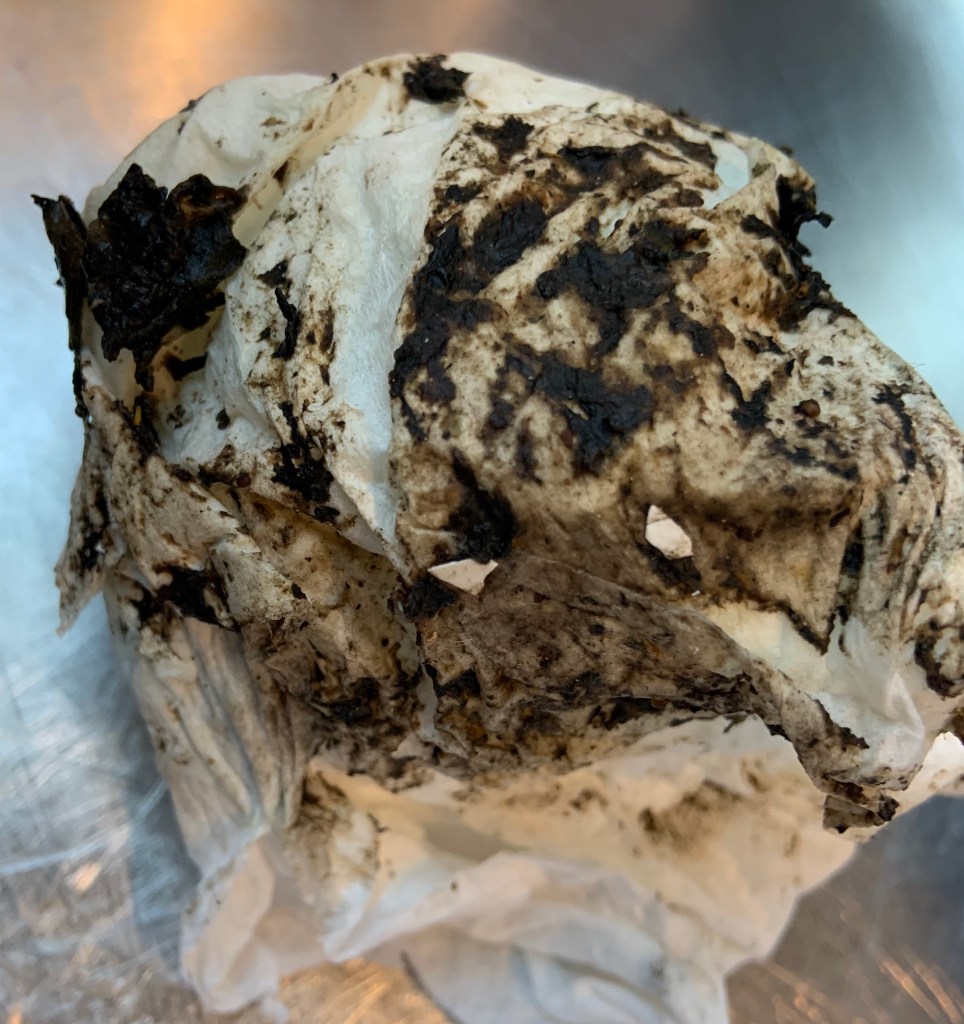
If you have discovered ANY of the above, I guarantee you that you will no longer rely on sodium laurel sulfate to do ANYTHING helpful in your disposer!
A half a roll of paper towels later and you MAY have reached and removed 90% of the thick, yucky, black globs of awfulness that reside and multiply in the bowels of your disposer…and that still remain after all that toxic cleanup is a mere memory.
Once I discovered this terrible truth about disposer cleaners, years ago when I was a young, naive disposer user, I decided to forego the packets of many names and just “do it myself”. It has become a weekly chore that simply must be done. It’s horrible while I’m purging all the badness out of my disposer, but once I’m finished, it feels like a huge triumph over filth! I do a little victory dance and quickly get those foul smelling paper towels out of my kitchen. I time this ritual for the night before trash pick up in my neighborhood! I don’t want those stinky paper towels lingering in my trash bin any longer than they have to. That’s how foul that smell can be.
About a year ago I learned something new about garbage disposers. I had thought that any model of disposer could at LEAST do the basics. I thought if you chopped up your little pieces of food that they would all go happily down the drain, chopped up even more and swished down and out easily. Not always so. Sometimes they land at a curve in the pipes and live there indefinitely no matter how small you cut them, causing not only backed up stuff, but backed up stink. So…one day a year ago I had the occasion to call the appliance repair guy for just such a problem. He came out, fixed the drain and then waxed practically, if not poetically about garbage disposers, their function and their foibles. One question led to the next and what I learned from him downright astounded me! He was the same repairman who told me the “hair brush/comb” debacle along with other harrowing stories I will not repeat, especially if you are cooking right now.
But he said something at the end that shocked and frustrated me.
He was very politely lecturing me on why I should not attempt to put even tiny bits of chicken or fish down the disposer, when I looked at him with a surprised face. (This was back when we did not cover our faces for our company). Thinking there was a funny punch line, I asked him why. He said that eventually I would just have to call him to come back and fix everything all over again.
I wrinkled my forehead and here’s how the rest of that conversation went.
ME:
(feeling somewhat confused)
“I know not to put egg shells or bones or coffee grounds down the disposer, now you are saying I can’t put fish and chicken down there. So, what CAN I put down my disposer?”
HIM: “Nothing!”
ME: WHAT?
HIM:
(Graciously repeating himself)
“NOTHING!”
ME: (stunned)

“It says right on it FOOD WASTE DISPOSER”!
Him: “I know.”
ME: “Then why do we have them at all?”
HIM: (nodding his head sagely)
“Exactly.”
ME: (persisting)
“I’m serious…what can I put down the disposer?”
HIM: (looking at me kind of sadly and maybe with a touch of disappointment at my apparent dullness)
“Nothing! Seriously, don’t put anything down there!”
HIM again: (pausing for emphasis)
“I’ve been in this business almost 30 years and I have found that these things were not made to handle all that junk.
ME: “Then what WERE they made for?”
HIM: You can do what you want, but Nothing good comes from putting garbage down that drain!”
ME: (stunned again but with the dawning of what all of this would mean from here on out, and knowing I had pushed him far enough)
“Well! Good grief!”
And with that brilliant response, I thanked him for his work and his wisdom and paid that very patient man.
I walked him to the door, and then sat down to fully mourn the loss of my favorite kitchen cleanup toy.
ONE YEAR LATER: I put only liquids and near-liquid stuff down my disposer now, with the occasional errant, cheating behavior. Mostly I heed that man’s advice. I am not recommending this policy for you. If your disposer has been faithful to you, I applaud it and wish you well. 🙂
FOR NOW:
A few life lessons learned from the kitchen:
Garbage in, garbage out!
(1) If we put garbage into our souls, our minds and in our words, we can’t expect to produce shining acts or speak pearls of wisdom.
(2) If we shine a light on the deep, dark place where we stuff all the garbage of our lives, we might find some stinking thinking and a bunch of rotting behaviors.
We can’t just leave it there and try to cover it up or flush it out. It’s not going away without some serious deep cleaning.
(3) There are no miracle packets! We have to DIY it all the way!!
We can’t rely on someone else or something else to do the really tough jobs in our lives. We are the best choice to do that hard work. We will have to roll up our sleeves, get our hands dirty, and do the hard work all by ourselves.
(4) If we want to clean that mess up right, we can’t fight toxic with more toxic.
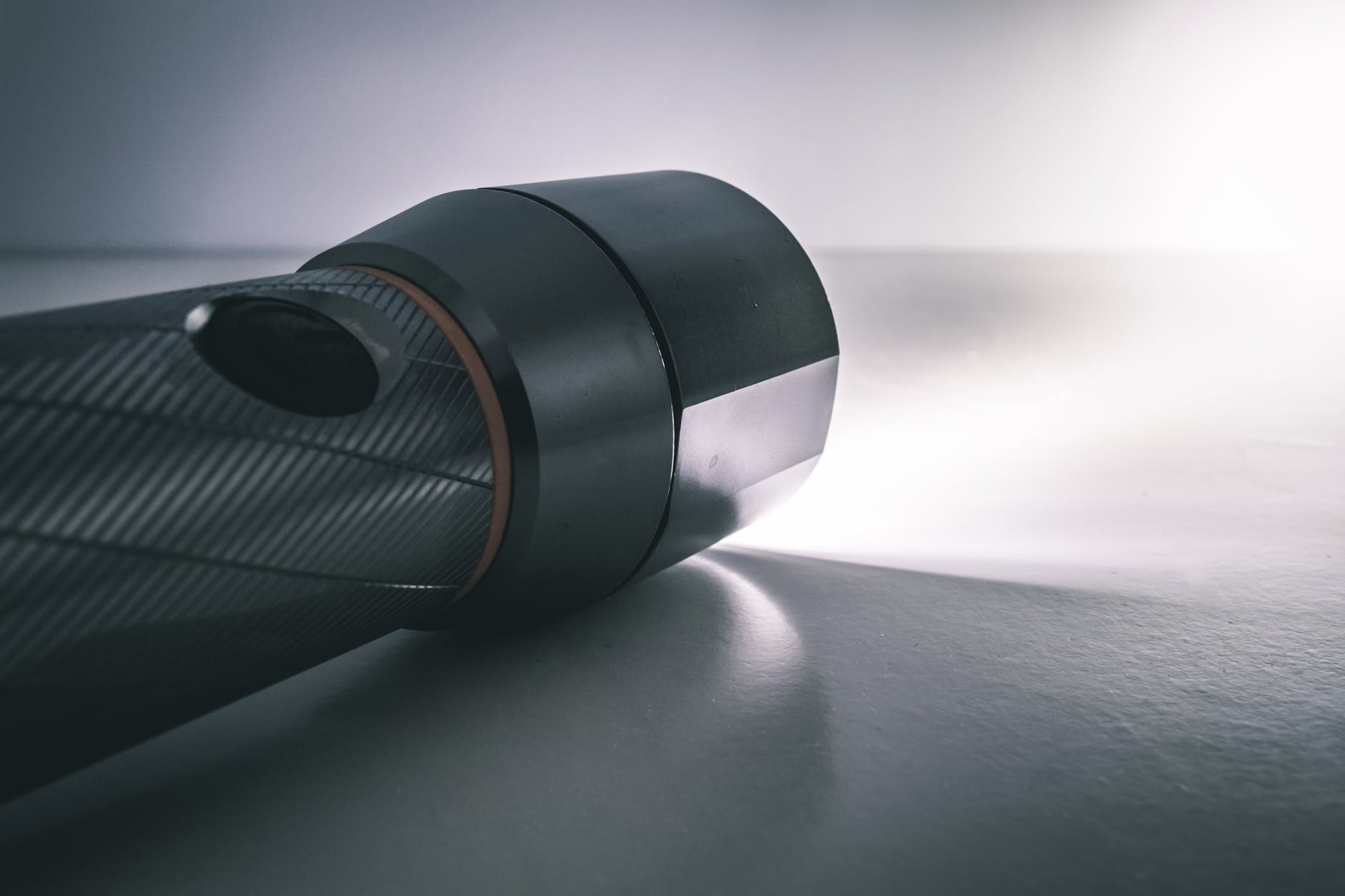
(5) We need to pour light into that darkness.
We need to find different ways to speak. We need to speak truths, not lies. We need to be kind, patient, loving, even when there is dirt all around us. We need to persevere through the messy parts and know that life is full of messy parts. We need to accept that nothing will be perfect, but all of it can be for good.
(6)Don’t put anything dirty down that drain!
We need to be mindful of what we feed our brains, our thoughts, our hearts. Clean thinking means good, positive, wholesome, healthy and holy thinking. You will not regret that kind of discipline.
In the end it is definitely worth it!
In the end you will feel triumphant. You might even do a victory dance!
Remember, this is an ongoing job! We don’t stay shined up for very long.
(7) Real world living calls for real world cleaning! It’s good! It’s healthy! And in the end, it smells good too!

“For what has been stored up in your hearts will be heard in the overflow of your words.” Matthew 12:34
 Around the Table
Wow! So good! May I share this with the small faith group I meet with once a month? It is so perfect, especially right now as tensions and anxieties perplex us daily. Thank you for this modern day parable.
LikeLiked by 1 person
Absolutely! You may share anything you like from this blog…I know if you send it in print, you will give author credit. Thank you for reading it!
LikeLike
Oh Linda, it is always a good day when I read your Around the Table blog. You are a word artist that paints each word with depth and color, Thank you for making my day so much more enjoyable! love ya! N
LikeLiked by 1 person
Oh, Nancy! Thank you for that!! I’m so glad you take the time to read my ruminations. LOL Sincerely, thank you.
LikeLike